
Clinical Supply Chains For Decentralized Trials In Sub-Saharan Africa
By Martin Olinga, medical laboratory tech, The Joint Clinical Research Centre (JCRC) Official
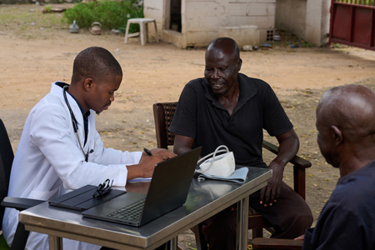
Sub-Saharan Africa carries a disproportionate share of the global burden of infectious and noncommunicable diseases, yet the region remains significantly underrepresented in global clinical research. Estimates from the Access to Medicine Foundation1 indicate that fewer than 3% of global clinical trials are conducted in sub-Saharan Africa, despite its high disease burden. This imbalance reflects long-standing structural centralization of clinical trial infrastructure, including investigational product (IP) management systems and supply chain depots, which remain concentrated in major urban academic medical centers.2,3
This centralization also influences how investigational product is positioned and replenished, often linking inventory decisions to urban depot capacity rather than the distribution of patient enrollment across geographically dispersed sites. From a clinical supply operations perspective, this centralization effectively defines how trials are executed in the region. It anchors IP storage, distribution, monitoring, and accountability processes to a limited number of urban hubs, creating a rigid execution model that is poorly aligned with geographically dispersed patient populations. As a result, supply chain design decisions are often constrained by infrastructure location rather than patient distribution, introducing inefficiencies in last-mile delivery and site-level supply continuity. These constraints are further intensified by geographic, economic, and logistical barriers that shape healthcare access across the region. Rural populations frequently face long travel distances, transport costs, income loss, and limited access to specialist facilities, all of which reduce participation in clinical research and routine healthcare services.4 In operational terms, these factors translate into predictable supply chain risks, including delayed recruitment, uneven site activation, and variability in investigational product demand forecasting across trial locations. The result is a continuous lag between patient-level activity in dispersed communities and its reflection in resupply planning, which introduces variability into site-level inventory continuity.
Decentralized clinical trials (DCTs) and hybrid models are increasingly positioned as a structural response to these constraints by relocating selected trial activities closer to participants. Importantly, sub-Saharan Africa is not operating in an infrastructure vacuum. Existing public health delivery systems already replicate many of the functional requirements of decentralized trials, particularly in how care, diagnostics, and logistics are distributed across national health systems. Rather than constructing parallel research infrastructures, DCT models can leverage community health systems, specimen referral networks, local health facilities, and digital health platforms already embedded within HIV, tuberculosis, malaria, and chronic disease programs across the region.5 This creates a distributed operating model where product flow and patient engagement follow the same community pathways, rather than separate systems operating in parallel. From a clinical supply chain standpoint, this shifts the region from a centralized trial execution model toward an emerging distributed operating environment. The critical implication is that investigational product distribution and trial logistics can increasingly be layered onto existing public health systems, provided that regulatory alignment, chain-of-custody integrity, and temperature control requirements are appropriately maintained.
Community Health Workers As Frontline Trial Partners
Community health worker (CHW) networks represent one of the most operationally significant distributed health system assets in sub-Saharan Africa. In Uganda, Village Health Teams (VHTs) were formally established in 2001 as the lowest tier of the national health system and serve as structured community interfaces for health promotion and linkage to care.6 These cadres already function as embedded community-level operators supporting surveillance, treatment adherence, immunization, maternal and child health services, and longitudinal patient follow-up. These interfaces also function as early indicators of changing patient activity patterns, which can influence when and where clinical supplies need to be positioned across the network. Field-level activity signals are consolidated through periodic facility reporting cycles that introduce a time-lagged input into central supply planning. Evidence from CHW effectiveness studies and community health systems assessments in Uganda shows that CHWs/VHTs operate as critical linking agents between households and formal health facilities, though with varying performance depending on governance and incentive structures.7 In operational terms, these functions closely mirror decentralized trial requirements, particularly around participant retention, follow-up scheduling, and field-level data capture. At the operational level, inventory reconciliation at decentralized nodes occurs through synchronization between site dispensing records and central inventory ledgers, creating a temporal gap between physical stock movement and system visibility.
In Uganda, the VHT system illustrates how CHWs can function as an extension of formal health system operations. VHTs are already integrated into national HIV programs, immunization tracking systems, and disease surveillance structures, effectively forming a distributed engagement layer between communities and health facilities. Within a decentralized trial model, this structure can support participant identification, retention support, adherence monitoring, including support for investigational product handling and distribution coordination at the community interface, and escalation of adverse events through established reporting pathways.
Rwanda provides further evidence of system maturity in digital community health integration, where CHW-supported mobile health systems have been evaluated for real-time reporting and structured surveillance capabilities.8,9 For clinical supply operations, this introduces a potential extension point for decentralized data capture and remote participant monitoring, which directly influences supply reallocation decisions and demand sensing.
Without consistent feedback between field activity and inventory planning, stock imbalances can emerge, resulting in overstock in some areas while other sites experience avoidable gaps.
However, integrating CHWs into clinical trial workflows introduces operational trade-offs. Evidence from CHW systems literature highlights risks related to workload saturation, supervision gaps, and compensation misalignment when additional research responsibilities are layered onto existing public health mandates.10.11 From a supply chain governance perspective, this necessitates clearly defined role boundaries, structured task allocation, and integration of CHW activity into formal trial oversight systems to maintain compliance and operational integrity.
Local Health Facilities And Specimen Referral Networks
Beyond community-level systems, sub-Saharan Africa’s network of district hospitals, health centers, and peripheral clinics provides a widely distributed clinical infrastructure that already functions as de facto decentralized care nodes. These facilities routinely manage patient flow, diagnostics, pharmacy dispensing, and follow-up care, forming a practical foundation for hybrid and decentralized trial execution.
Operationally, this means that many core trial functions already exist within these facilities. The primary constraint is not capability but integration into regulated clinical trial workflows, particularly around investigational product handling, protocol adherence, and data standardization.

Significant strengthening of these networks has occurred through HIV and tuberculosis program investments, which have improved laboratory connectivity, logistics coordination, and surveillance systems. Uganda’s specimen referral system, based on a hub-and-spoke model, has been well documented as a scalable national diagnostic transport architecture enabling efficient centralized testing from distributed sites.12,13
Regional frameworks supported under EDCTP (European & Developing Countries Clinical Trials Partnership) have further contributed to coordinated clinical research infrastructure strengthening, including cross-country trial networks and regulatory harmonization initiatives.14,15
Uganda also demonstrates operational integration through expansion of integrated chronic disease services within HIV platforms. Each transfer between hub facilities and peripheral collection points introduces a chain-of-custody handoff, shifting accountability for temperature integrity, documentation, and traceability between operational actors. Hypertension and diabetes care are increasingly embedded within HIV clinics, demonstrating that vertically funded programs can evolve into multi-disease delivery platforms without structural redesign.16
Uganda’s specimen referral and laboratory hub systems further represent one of the most mature decentralized logistics architectures in the region. Hub-and-spoke transport networks already support HIV viral load testing, tuberculosis diagnostics, and early infant diagnosis under controlled chain-of-custody and temperature management conditions, effectively decoupling sample collection from centralized laboratory analysis.17
Operational Dynamics And Clinical Supply Chain Considerations
Despite strong foundational systems, decentralized and hybrid clinical trials introduce complex operational constraints that directly impact clinical supply chain performance. Evidence from implementation research in Uganda and similar LMIC contexts highlights transportation limitations, regulatory heterogeneity, fragmented digital systems, and workforce capacity constraints as persistent challenges.18,19
From a supply chain execution standpoint, these constraints converge most significantly in last-mile logistics performance, temperature-controlled distribution reliability, and real-time synchronization of inventory and patient-level demand signals. Decentralized demand signals are typically aggregated through hierarchical reporting structures, introducing a temporal lag between actual consumption at site level and its reflection in central planning systems.
Participant retention is generally improved through proximity-based trial design, but remains dependent on sustained engagement infrastructure. Embedding trial operations within trusted community and facility-based systems improves adherence and reduces historical barriers to participation, effectively shifting retention management from centralized monitoring systems to distributed operational nodes.5
Specimen and investigational product logistics remain among the most sensitive operational domains. Documented risks include irregular transport schedules, temperature excursions, limited cold chain redundancy, and variability in handling practices across decentralized sites.20,13 These risks are particularly pronounced in trials involving biologics, vaccines, or temperature-sensitive compounds. These constraints often drive replenishment behavior toward exception-based responses rather than consistent planned inventory adjustments aligned with emerging demand patterns in practice, and temperature excursions or transport delays convert planned replenishment cycles into exception-driven resupply events, where inventory reallocation is triggered reactively rather than through forecast-based scheduling.
Conclusion
The future of decentralized and hybrid clinical trials in sub-Saharan Africa is fundamentally an exercise in systems integration rather than infrastructure creation. Existing public health delivery platforms already provide a distributed operational backbone capable of supporting clinical trial execution across community and facility levels.
Community health workers, 6,7 local health facilities,16 specimen referral networks,12 and laboratory logistics systems collectively form an emerging decentralized execution ecosystem. When viewed through a clinical supply chain lens, these systems already function as distributed nodes for recruitment, retention, sample collection, and logistics execution under real-world constraints.
The strategic shift required is therefore operational rather than structural. It involves aligning public health systems with clinical trial execution requirements, strengthening logistics traceability across distributed nodes, and formalizing integration pathways that allow decentralized trials to operate at scale while maintaining regulatory compliance, supply integrity, and operational resilience in resource-limited settings.
References:
- 2024, Clinical Trial Landscape / R&D Geography analyses
- Access to Medicine Foundation, 2024
- Windisch et al., 2011 – Globalization and Health, ART supply chain strengthening in Uganda
- Dowhaniuk, 2021, International Journal for Equity in Health – Uganda rural access inequities
- Chan et al., 2014 – BMC Health Services Research, Lablite decentralization mapping study
- Musinguzi et al., 2017 – Human Resources for Health
- BMJ Open, 2024 – Kabanda et al. community health system capacity study
- WHO Digital Health Initiative reports
- Patel et al., Lancet Digital Health studies on CHW digital workflows
- Lehmann & Sanders, WHO CHW evidence synthesis
- PSI CHW workforce reports
- Kobusingye et al., Clinical Infectious Diseases / Uganda specimen referral network evaluation
- Nabwire et al., Uganda EID hub system evaluation
- EDCTP Strategic Research Agenda 2021–2025
- EDCTP Annual Reports 2023–2024
- Ekirapa et al., BMJ Open HIV service costing study
- WHO Uganda laboratory transport system evaluation
- BMJ Open implementation science literature on Uganda health systems
- WHO health systems strengthening reports
- WHO immunization cold chain logistics guidance
- Uganda EID transport evaluations
- BMJ Open CHW systems studies
- Uganda hub-and-spoke system evaluations
About The Author
 Martin Olinga is a medical laboratory professional and clinical research practitioner based in Uganda, with experience in hospital diagnostics, public health laboratory systems, and operational research. He is focused on improving laboratory and health system performance in resource-limited settings.