
How The Iran Conflict Threatens Global Clinical Supply Chains
A conversation with Stella Vnook, Ph.D., global healthcare leader & clinical development strategist
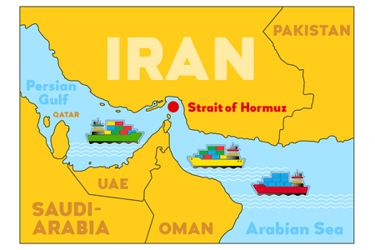
The events unfolding in the Middle East are once again testing assumptions that have quietly underpinned global clinical trial supply strategies for years. As logistics corridors across the Persian Gulf face disruption, sponsors are being forced to reassess how much resilience is actually built into their depot networks, regional inventory positioning, and end-to-end clinical supply models.
Elizabeth Urbanek, executive editor of Clinical Supply Leader, spoke with Stella Vnook, global healthcare leader & clinical development strategist, about what the Iran conflict is exposing in real time and why it is accelerating a shift away from efficiency-optimized supply chains toward models designed for continuity under stress.
In this interview, Vnook breaks down how depot strategy is being rethought, why just-in-time clinical supply assumptions are under pressure, and what operational gaps emerge when geopolitical disruption intersects with temperature-sensitive investigational product logistics.
How are clinical supply teams reassessing depot strategy and regional inventory positioning in response to instability in the Middle East?
What the Iran conflict exposed is that most clinical supply depot strategies were built for efficiency rather than resilience. Those are not the same design objective.
A depot strategy is essentially how you preposition your investigational product — the actual drug being tested in a clinical trial — across regional warehouses around the world. The conventional model was built around hub-and-spoke logistics running through the Persian Gulf: Dubai, Doha, Abu Dhabi. Those three airports alone handle an enormous share of temperature-controlled pharmaceutical air cargo moving between Europe, Asia, and Africa. When U.S. and Israeli military operations began on February 28, 2026, and Iran subsequently closed the Strait of Hormuz on March 2, all three hubs went offline simultaneously.
Commercial activity through the strait dropped to 90 percent below pre-war levels within two weeks. Global air cargo capacity in the gulf region dropped 79 percent between February 28 and March 3 — driving a 22 percent reduction in worldwide air cargo capacity. That is a collapse of the architecture.
Between 10 and 20 percent of global pharmaceutical commerce passes through the Middle East entirely, according to Prashant Yadav, senior fellow for global health at the Council on Foreign Relations. That is one-fifth of the world's medicine supply running through a region at war.
What the smartest clinical supply teams are doing right now is moving to multiregional depot redundancy. The principle is simple: no single geographic node should be irreplaceable. Preposition enough buffer stock at secondary depots in Southeast Asia, Eastern Europe, and Latin America so you can reroute without affecting the clinical integrity of the trial.
The practical challenge is that most sponsors have optimized inventory so tightly over the past decade that they don't have the excess buffer stock. Just-in-time clinical supply chain logic was efficient. In a world where strait closures are possible, it's a liability. The organizations that will come out of this in better shape are the ones recalculating their regional inventory positioning right now — not around cost minimization but around continuity probability.
What operational challenges emerge when sponsors must rapidly reroute temperature-controlled investigational product shipments away from established logistics lanes?
This is where the clinical trial supply chain is fundamentally different from commercial pharmaceutical logistics, and the distinction matters enormously.
Commercial drugs have established stability data. If a shipment runs a few days late, the product is almost always still viable. You assess, document, and move on. Investigational product often doesn't have that luxury. Clinical trial materials typically have narrow stability windows, sometimes only a three-day delivery requirement, with limited data to justify extensions. When you're in Phase 1 or Phase 2, you haven't yet generated the real-world stability evidence that would let you extend expiration dates or validate alternative storage conditions. Major carriers rerouting around the Cape of Good Hope add 10 to 14 days to journey times. So, it's not just a logistics problem.
Alex Guillen, supply chain expert at logistics tracking company Tive, put it plainly: "If you move televisions and you are late by two days or three days, well, it's the same television. If you move temperature-controlled drugs and you're late by two, three days, you might just as well throw the merchandise away — because it just goes bad."
India, which accounts for a massive share of global pharmaceutical exports, saw air cargo rates increase by up to 350 percent as companies competed for the same rerouting capacity through adjacent airspace. And even if you can afford the rerouting cost, the qualified cold chain facilities at alternative transit points may not have the equipment, the certified personnel, or the capacity to absorb the sudden volume.
The patient impact is real. Oncologists wrote an opinion column in the Philadelphia Inquirer in March about Charlie, a 65-year-old retired sergeant major with Stage 4 colon cancer who had been driving more than 60 miles to receive a biosimilar infusion — a highly complex engineered medicine targeting cancer cells — that was keeping his disease at bay. They wrote because the supply hadn't run out yet. They were sounding the alarm because they understood what was coming and they needed people to pay attention before it did.
Clinical data science company Phesi analyzed more than 65,000 active global trials across 350,000 sites in 186 countries and found that 4,361 trials — 6.7 percent of all ongoing studies — have been negatively impacted by military actions in the Middle East, affecting 7,958 trial sites. All 10 of the largest global drug companies have clinical trial operations in the affected region, some with as many as 500 sites. The hardest hit indications? Lung cancer, breast cancer, heart failure, and multiple myeloma. Not rare diseases — the diseases with the largest patient populations and the most urgency.
How do geopolitical disruptions affect comparator sourcing and blinding strategies for global clinical trials?
This is one of the most technically complex and underappreciated dimensions of what's happening, and it rarely makes headlines.
In most clinical trials — especially Phase 2 and Phase 3 — you're not just testing your drug against a placebo. You're testing it against the current standard of care: the approved drug patients are already receiving. That approved drug is the comparator. In a blinded trial — where neither the patient nor the physician knows who's receiving the experimental treatment versus the comparator — you have to source that comparator, match it visually and physically to your investigational product, and deliver it through the same supply chain you're already managing.
The Iran conflict has created a layered problem here.
First, comparators are often regionally sourced — you can't always get U.S.-labeled product to European sites, or vice versa, without complex importation processes. Notable single-region dependencies include amoxicillin oral suspension, where 48 percent of global production comes from Jordan; 24 percent of doxycycline capsules comes from Jordan; and 73 percent of flumazenil API — used in anesthesia reversal — comes from Israel and Jordan combined. These are not investigational compounds. These are standard-of-care drugs that serve as comparators in hundreds of active global trials.
Second, the matching and blinding work — overencapsulation, relabeling, repackaging — typically happens at specialist secondary packaging operations that depend on materials and logistics corridors now compromised. If you can't get the comparator to the packaging facility on time, the matched kit doesn't exist. The patient visit window passes. The dosing interval is missed.
Third, and this is the one that doesn't make headlines: when you can't get your comparator to a site, you cannot simply substitute. The comparator is specified in the protocol. Changing it requires an IRB amendment and often regulatory authority notification. That process takes weeks to months. What starts as a three-day logistics failure becomes a 12-week regulatory process. A supply chain disruption becomes a protocol deviation. A protocol deviation becomes a data integrity question that follows the program all the way to its regulatory submission.

What role do RTSM configurations and adaptive supply models play when transit timelines become volatile or unpredictable?
Randomization and trial supply management (RTSM)is the software backbone of clinical trial drug supply. It determines which patient receives which treatment at which site, manages inventory levels, triggers resupply orders, and tracks kit allocation across every depot and trial site globally. Done well, it is one of the most powerful risk mitigation tools in clinical operations. Done poorly — or configured for a stable-world assumption — it becomes part of the problem.
What the Iran conflict has revealed is that most RTSM systems were configured around predictable transit timelines. A resupply trigger is set assuming, say, a five-day replenishment window from a depot. When that window suddenly becomes 19 days because the primary lane is gone, the system starts generating false confidence. It thinks inventory is adequate because it's counting what's in transit — not accounting for the fact that what's in transit may not arrive before the next patient visit.
The adaptive supply models holding up right now are built with dynamic transit time inputs — systems that can ingest real-time logistics data and recalculate safety stock thresholds automatically when route assumptions change. By 2026, AI-driven supply forecasting has moved from theoretical capability to practical reality in the better-equipped RTSM platforms. Sponsors running those systems can model a "what if the Dubai lane closes for 30 days" scenario in near real time and rebalance depot inventory before there's a crisis — not after one has already derailed a dosing window.
The Phesi analysis also noted that the scale of disruption may create a need for digital twins — computational models of individual patients that allow sponsors to maintain statistical validity even when real-world patient data becomes incomplete due to missed visits or delayed dosing. That's a significant escalation. We have moved from supply chain problem to scientific integrity mitigation. The sponsors running static RTSM configurations set at protocol design are the ones reaching for those tools under duress, rather than having built resilience in from the start.
Are current clinical trial supply networks too dependent on single-region suppliers for packaging components, specialty materials, or secondary manufacturing operations?
Unambiguously, yes. And the Iran conflict is the third major demonstration of this in six years, after COVID-19 and Russia-Ukraine. At some point the industry has to stop calling these events black swans and start calling them what they are: predictable consequences of geographic concentration risk that we chose not to address.
Direct manufacturing exposure in the affected region is limited — roughly 0.3 percent of API production globally. But the transit dependency is where the real exposure lives. Even a small percentage of production becomes a crisis when the entire logistics corridor those materials travel through collapses simultaneously. The Gulf Cooperation Council countries, particularly the UAE and Qatar, function as the connective tissue of global pharmaceutical air logistics. When they go offline, the entire network degrades, not just the regional one.
Lloyd's of London effectively suspended insurance for international shipping through the Strait of Hormuz, removing the commercial viability of the route for most operators. That is not a political statement. That is the world's most sophisticated risk assessment institution saying the route is not commercially insurable. When Lloyd's won't write the policy, the route doesn't exist for practical purposes.
And the dependency extends beyond APIs and finished product. NHS England's Chief Executive Sir Jim Mackey warned in late March that syringes, gloves, and intravenous bags were at risk because they all depend on petrochemical-derived materials now under supply pressure. IV bags are made from PVC. Sterilization packaging depends on petroleum-based plastics. The pharmaceutical supply chain sits inside an energy supply chain. When oil disruption happens, it doesn't stay in the fuel lane. It migrates into every product that uses a petroleum derivative in its manufacturing process — which in clinical trial supply is nearly everything.
The honest assessment: the industry ran a decade-long lean optimization exercise, and it worked beautifully for cost and efficiency. What it produced is supply chains with essentially no slack, highly concentrated geographic dependencies, and limited prequalified backup options. The structural vulnerability persists until it's redesigned.
What contingency planning separates organizations that can maintain study continuity during geopolitical disruption from those that experience enrollment delays or protocol risk?
I have watched enough supply chain crises across 25 years — COVID, natural disasters, Russia-Ukraine, and now this — to have a very clear view on what separates the organizations that hold together from the ones that break.
The answer is not a better contingency document. It's prequalification. There is a critical distinction between a contingency plan that says "in the event of disruption, we will identify and qualify an alternative depot, lane, or supplier" and one that says "in the event of disruption, we will activate our prequalified alternative." The first is a procedure. The second is actual resilience. The difference between them, when a crisis hits, is typically six to 12 weeks, which is exactly the window in which enrollment gaps open, protocol deviations accumulate, and study integrity begins to erode.
Practically, what resilience looks like in clinical supply is this: dual-qualified depots in geographically non-correlated regions. Not two facilities that both depend on Dubai — that's co-located risk, not diversification. Real geographic diversification means one depot in the Americas, one in Europe, one in Asia-Pacific, with enough inventory prepositioned at each to sustain the trial independently for a minimum of 60 to 90 days. It means secondary packaging partners on multiple continents with current qualification files — not theoretical relationships. It means RTSM configurations that have been scenario-tested against disruption cases before the protocol is locked, not patched under pressure after a lane collapses.
The organizations maintaining continuity right now have one other thing in common: they elevated supply chain risk as a board-level and executive leadership conversation before the crisis hit, because the prework required to build resilience — the dual qualifications, the buffer inventory investment, the scenario planning — requires budget and leadership commitment that will never survive a cost optimization exercise in a stable environment. It only gets funded when someone in the room has the authority to say: the probability of disruption is not zero, the cost of being wrong is enormous, and we are going to invest in resilience even when we cannot name the specific event that will demand it.
The Strait of Hormuz closing has been in every pharmaceutical supply chain risk assessment for 20 years. The difference between the organizations holding together right now and the ones scrambling is not technical capability. It is the organizational will to act on a risk that seemed theoretical until it wasn't. Contingency planning should not be a compliance exercise. It should be a patient care commitment. And right now, patients are the ones paying the price for the plans that were never built.
About The Expert:
 Stella Vnook, Ph.D. is a biotech CEO, board chair, and healthcare investor with more than 25 years of experience building and scaling companies across biotechnology, pharmaceuticals, medical devices, and regenerative medicine. She has led organizations through clinical development, commercialization, capital formation, strategic partnerships, and successful exits.
Vnook currently serves as Executive Chair and acting CEO of Kaida BioPharma, a clinical-stage oncology company developing a first-in-class prolactin receptor antagonist for ovarian cancer. She is also Founder of Aviva Ventures LLC, an investment and venture platform supporting healthcare and life science companies through commercialization and growth strategy. Her career includes leadership roles at Merck & Co. and Catalent Pharma Solutions and contributions to more than $100M in capital raised, multiple successful exits, and 45+ global patents.