
Lessons From Ebola And Marburg: Building Clinical Trial Supply Chains Under Pressure
A Conversation Between Ardent Nkusi and Elizabeth Urbanek, Executive Editor, Clinical Supply Leader
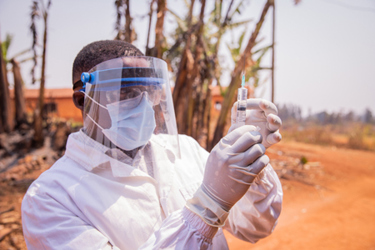
Outbreak-response vaccine trials leave little time to build the systems needed to store, transport, and manage investigational products. Clinical supply teams must establish reliable distribution, prepare trial sites, and maintain product accountability while responding to rapidly changing needs. When a vaccine requires ultra-low-temperature (ULT) storage and transportation, even basic logistics can become a significant operational challenge.
Ardent Nkusi experienced these pressures while supporting a Marburg clinical trial in Rwanda. The work involved more than delivering investigational products. Passive vaccine storage devices required days of preconditioning before use, trained pharmacy personnel had to be available as trial activities expanded, and teams had to coordinate distribution with temperature monitoring, inventory management, and documentation requirements.
In this conversation, Nkusi shares lessons from the Marburg trial and his experience supporting Ebola vaccine trials, including the practical challenges that can complicate urgent distribution and the preparations that can help clinical supply teams respond more effectively to future infectious disease outbreaks.
Context: The experience I relate to most is the Marburg clinical trial in Rwanda, as it presented greater operational challenges and involved more responsibilities for me. Unlike a conventional clinical trial, it was conducted in response to an ongoing outbreak, which meant that preparation had to be completed within a short timeframe and activities had to move much faster. In addition, the investigational product (IP) required ultra-low-temperature (ULT) conditions for both storage and transportation, adding another layer of complexity to the clinical supply chain.
1. From your experience supporting Ebola and Marburg vaccine trials, what were the biggest clinical supply and cold chain challenges that teams underestimated before the trials began?
1. Availability of passive vaccine storage devices (PVSDs)
One of the biggest challenges was underestimating the number of passive vaccine storage devices required for last-mile transportation from the central store to trial sites. When distributing vaccines under ultra-low-temperature (ULT) conditions, specialized containers are required. These containers are expensive, and demand can increase rapidly as the number of trial sites and vaccine deliveries grows.
2. Time required for preconditioning
The PVSD containers used for ULT distribution required a minimum of three days of preconditioning to reach the required temperature. Because these containers were needed for daily distribution, and demand increased over time, managing their availability became a significant operational challenge. We had to coordinate vaccine distribution while simultaneously tracking the preconditioning status of each container to ensure that a suitable device would be ready whenever a delivery was required.
3. Availability of trained personnel
When a clinical trial is conducted alongside an ongoing outbreak response, the number of participating sites and personnel can increase rapidly depending on the outbreak dynamics. This creates a need for additional trained site pharmacists who understand the study protocol and pharmacy manual. If only a limited number of personnel have received the necessary training, the team can quickly face staffing shortages, potentially affecting the timely and compliant handling of investigational products.
4. Inventory management, reporting, and quality control
Managing inventory across multiple trial sites, ensuring accurate reporting, and conducting quality checks created a substantial workload for the supply chain and pharmacy teams. In addition to their operational responsibilities, team members had to complete extensive paperwork to maintain investigational product accountability and compliance. Balancing these administrative requirements with urgent operational demands was particularly challenging during the outbreak response.
2. How did ultra-low temperature requirements influence decisions around packaging, transportation, storage, and site readiness throughout these studies?
1. Greater complexity in temperature-controlled distribution
ULT distribution made transportation more challenging because it required specialized passive containers, careful handling, and appropriate packaging procedures. At the storage level, repeatedly opening ULT freezers can increase the risk of temperature fluctuations and excursions because of the temperature difference between the freezer and surrounding environment. This requires close monitoring and appropriate corrective action.
2. Preparing containers before they were needed
Because preconditioning could take at least three days, waiting until a delivery request was received was not a practical option. Available passive containers had to be preconditioned in advance, even when immediate demand was uncertain. This ensured that the team could respond quickly to urgent requests without compromising the required storage and transportation conditions.
3. Protecting temperature-monitoring equipment
Temperature probes and monitoring devices required careful handling because they could be damaged during routine operations in ULT environments. Ensuring that monitoring equipment remained functional and reliable was essential for maintaining temperature control and documenting the conditions under which the investigational product was stored and transported.
4. Personnel safety and specialized protective equipment
Working in ULT environments during container preconditioning, packing, and handling presented safety risks, including cold burns. Personnel therefore needed appropriate cold-protective equipment and practical training in safe operating procedures. Site readiness required not only suitable storage and transportation equipment, but also trained staff who could operate it safely and correctly.
3. When conducting trials in regions with limited infrastructure, what practical strategies proved most effective for maintaining temperature control and preventing supply disruptions?
1. Ensuring an uninterrupted power supply
Reliable electricity is essential for maintaining temperature-controlled storage. Grid electricity should be supported by backup solutions such as generators and, where appropriate, solar power systems. Combining these sources can improve resilience and reduce the risk of cold chain failures caused by power interruptions.
2. Prioritizing preparedness and infrastructure maintenance
Preparedness should begin well before an outbreak occurs. Investing in appropriate cold chain infrastructure, regular preventive maintenance, and early identification of equipment problems help reduce the risk of disruptions when the supply chain is under pressure.
3. Using reliable temperature-monitoring systems
Temperature-monitoring devices should be available for routine monitoring and documentation, with backup devices on hand (don’t trust one device per equipment) in case the primary equipment fails. Where feasible, remote temperature-monitoring systems can provide real-time visibility of storage conditions and generate alerts when temperatures move outside the acceptable range. This allows teams to respond quickly rather than discovering temperature excursions during subsequent manual checks.
4. Investing in trained and available personnel
People are central to the success of outbreak response. During an outbreak, workloads can increase significantly, requiring staff to work in shifts and respond to urgent requests. Maintaining a sufficient pool of trained personnel, conducting regular refresher training, and ensuring that staff are available when needed are essential for sustaining operations and preventing avoidable errors.

4. What lessons did these outbreak-response trials teach you about balancing speed with GCP, GDP, and investigational product accountability requirements?
1. Planning is everything
The most important lesson was that speed and compliance depend on preparation. Compliance is non-negotiable, but achieving it during an emergency requires planning ahead, thinking about all possible scenarios, and preparing appropriate responses. Involving relevant stakeholders early also helps identify gaps that might otherwise be overlooked. Experience is valuable, but effective planning helps ensure that critical requirements are not missed.
2. Maintain real-time documentation and accountability
Even during the busiest days, records must be completed accurately and in a timely manner. Before leaving work, the team should review the day's activities, reconcile investigational product movements, and ensure that the required documentation is complete. Closing out the day's work properly reduces the risk of carrying unresolved discrepancies into the following day, when new challenges and urgent requests may arise.
3. Never compromise quality and compliance due to pressure
High demand and urgent requisitions can create pressure to make rapid decisions. However, decisions should remain evidence-based and consistent with applicable procedures, product requirements, and regulatory expectations. When an unexpected situation arises, it is important to assess the risks and seek the necessary guidance rather than taking shortcuts that could compromise product quality, patient safety, or compliance.
4. Make communication a priority
Effective communication is essential across the entire supply chain. The team must maintain clear and timely communication with drivers, warehouse operators, colleagues, trial sites, security personnel, the principal investigator, and the wider clinical trial team. This helps ensure that everyone understands changing priorities, delivery schedules, handling requirements, and any operational issues that need immediate attention.
5. Recognize the expectations placed on the supply chain/ pharmacy team
During an outbreak-response trial, the supply chain team often starts preparing before other activities begin and continues working until the day's operational requirements are completed. Patience, flexibility, and teamwork are therefore essential. Having a sufficiently sized team helps distribute responsibilities, manage workloads, and maintain the quality of operations under pressure.
6. Be prepared for changing priorities
Outbreak-response trials rarely follow a fixed schedule. Some sites may be planned in advance, while others may be added at short notice following contact tracing or changes in the outbreak situation. The supply chain team must therefore remain flexible and ready to adapt delivery plans, resource allocation, and operational priorities while maintaining compliance with the protocol.
5. Looking back, what supply chain practices developed during the Ebola and Marburg programs should become standard for future vaccine and infectious disease clinical trials?
Although our team operated according to the established study protocols and procedures, the experience highlighted an important opportunity to strengthen outbreak preparedness: supply chain readiness should become an integral part of infectious disease outbreak preparedness.
Traditionally, outbreak preparedness focuses on the systems and personnel required to respond to an emergency. However, as investigational vaccines are increasingly used in clinical trials during outbreaks, preparedness must also account for the additional logistical, regulatory, and operational requirements of conducting a clinical trial under emergency conditions.
A key recommendation is to establish a joint trial-readiness process that brings together outbreak-response teams, clinical trial teams, pharmacy personnel, and supply chain professionals. This would help ensure that the relevant personnel, equipment, procedures, and distribution arrangements are prepared before an outbreak occurs.
Training in clinical trial supply chain management should also become a standard component of preparedness programs for infectious disease response teams. Such training should cover investigational product handling, cold chain management, temperature-controlled transportation, documentation, and the practical application of study protocols and pharmacy manuals.
Preparing these capabilities in advance would help teams respond more quickly when a vaccine trial needs to be initiated during an outbreak, without compromising product quality, patient safety, or regulatory compliance.
6. What advice would you give today's clinical supply professionals who may one day be asked to rapidly build a supply chain for the next emerging infectious disease trial?
1. Master the fundamentals before the crisis
Develop a strong understanding of cold chain management, GDP and GMP requirements, risk assessment, inventory management, and clinical trial regulations. Emergencies test the strength of your fundamentals, so continuously learn from existing guidance, previous outbreaks, and the experiences of professionals who have managed similar situations.
2. Build readiness before the next outbreak
Do not wait for the next outbreak to start developing the supply chain capabilities you will need. Prepare systems, resources, and processes that can be activated quickly while protecting product quality, patient safety, and regulatory compliance.
3. Develop adaptable tools and procedures
Prepare practical SOPs, shipment-planning templates, and contingency plans that can be adapted to different outbreak scenarios. Avoid creating an entirely new process for every emergency, but never assume that all investigational vaccines have the same storage, transportation, packaging, or regulatory requirements. Always assess the specific needs of the product and trial.
4. Learn to adapt without compromising quality
Outbreaks rarely follow perfect plans. Clinical supply professionals must learn to assess risks, prioritize competing needs, make evidence-based decisions, and adapt to changing circumstances. The challenge is to respond quickly while maintaining the standards required to protect the investigational product and the patients participating in the trial.
5. Advocate for investment in cold chain infrastructure
Reliable cold chain infrastructure cannot be established overnight. Advocate for investment in appropriate storage equipment, temperature-monitoring systems, backup power supplies, transportation solutions, and preventive maintenance well before an emergency occurs. These investments build the operational capacity needed to respond effectively when time is limited.
About The Contributor:
 Ardent Nkusi is a health supply chain professional with experience in vaccine management, cold chain operations, and clinical trials. His work focuses on maintaining the quality, safety, and availability of vaccines and investigational products, particularly in challenging operational environments. He has experience in vaccine distribution, cold chain equipment management, and the operational requirements of clinical trial supply. Recently worked in Clinical Trial Supply Management at BioNTech SE, Nkusi is building his expertise in Project Management, clinical trial logistics and global supply chain management . He is committed to strengthening health supply systems and advancing equitable access to safe, effective health products, particularly for vulnerable populations.