
Mastering Temperature Control And Advanced Therapy Logistics In Global Clinical Supply Chains
By Laura Hay, senior director of global program management, Trax Group | 2025 Winner, everywoman Customer/Passenger (Leader) Award
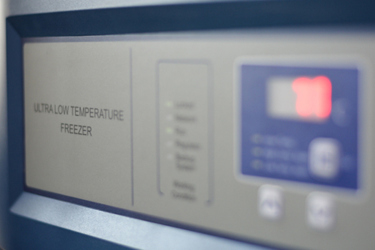
In today’s global clinical trial supply chain environment, temperature control and advanced therapy logistics have become one of the most complex and high-stakes areas for Fortune 500 organizations. As biologics, cell and gene therapies, and other clinical trial materials continue to scale, the margin for error across vein-to-vein supply chain execution has become extremely small.
What used to be a niche operational concern is now a clinical development and clinical operations priority: how do you maintain product integrity, regulatory compliance, and end-to-end visibility across a fragmented global clinical supply and logistics network that supports patient dosing?
Let’s take a closer look.
The Rising Complexity Of Temperature-Sensitive Clinical Trial Supply Chains
Global clinical trial supply chains today are not only larger — they are more fragile. Temperature-controlled logistics require coordination across multiple carriers, depots, clinical sites, and third-party clinical packaging and labeling facilities, as well as multiple regulatory jurisdictions governing IMP movement and release. Each touchpoint introduces risk to patient dosing timelines and study continuity.
For advanced therapies in particular, even minor temperature excursions can render investigational product unusable or require quarantine and quality disposition. That translates directly into lost patient doses, delayed enrollment timelines, and potential protocol deviations.
At the same time, clinical supply chains are being reshaped by external pressures. Geopolitical instability constrained cold chain capacity, and shifting trade routes are forcing companies to rethink traditional clinical depot and distribution models. Regionalization of clinical trial execution has added further complexity, creating a more fragmented and less predictable operating environment for IP available at the site level.
In this context, temperature control is no longer just an operational requirement — it is a critical clinical supply strategy that directly impacts patient dosing success.
Why Visibility Is The Defining Challenge
Across global clinical trial supply networks, the biggest gap I continue to see is visibility.
Many organizations still lack real-time insight into where investigational shipments are, what condition they are in, and how upstream or downstream disruptions may impact patient dosing windows and site-level inventory. This becomes especially critical in cold chain logistics, where delays or deviations can quickly escalate into investigational product quarantine or loss.
Data often sits in silos — across carriers, third-party logistics providers, IRT/RTSM systems, and internal clinical supply planning tools — making it difficult to build a single reliable view of end-to-end movement and site inventory positioning.
Without that visibility, teams are forced into reactive decision-making rather than proactive intervention that could protect patient dosing continuity.
When a temperature deviation or shipment delay occurs in a clinical trial supply chain, the impact is not isolated to logistics; it triggers a downstream series of operational decisions. This may include quarantining investigational product at a depot, notifying quality and clinical supply teams, reassessing patient dosing windows in IRT/RTSM systems, and in some cases initiating emergency resupply or rerouting strategies. Without real-time integration between temperature monitoring systems and clinical supply planning platforms, these decisions are delayed, increasing the risk of missed doses or study disruption.
Cost Pressure And The Temperature-Controlled Equation
Temperature-controlled clinical trial logistics are also significantly more expensive than standard freight. Specialized packaging, monitoring technologies, GDP/GMP compliance requirements, and expedited shipping all add cost pressure.
For many organizations, clinical trial transportation spend can represent a significant portion of total study costs, particularly in cell and gene therapy programs with complex global deployment models.
In a slower-growth global economy, the challenge is clear: companies must find ways to maintain strict temperature integrity while also optimizing cost per patient randomized and overall study supply efficiency.
This requires a more disciplined approach to forecasting, network design, and depot strategy decisions.

Where Risk Is Highest In Advanced Therapy Logistics
The most fragile points in temperature-controlled clinical supply chains are often not obvious.
They include:
- first-mile clinical packaging, labeling, and shipment release from GMP facilities
- airport and customs delays that impact IMP release and study timelines
- handoffs between multiple logistics providers and depots
- last-mile delivery coordination to clinical sites or patient homes
- lack of standardized temperature monitoring and excursion management across partners.
Each of these points introduces variability. Without strong controls and real-time excursion monitoring, risk compounds quickly across the network, potentially impacting dose availability and protocol compliance.
What “Temperature-Controlled Intelligence” Actually Means
In practical terms, temperature-controlled intelligence is the ability to connect IRT data, logistics tracking, and temperature monitoring into one continuous system.
It means moving beyond static tracking and toward real-time insight that enables intervention before a patient dose is impacted.
This includes:
- continuous temperature monitoring across IMP shipments
- integrated visibility across all logistics partners
- predictive analytics to identify delay or excursion risk
- standardized data models across carriers and regions.
When done effectively, it transforms supply chains from reactive systems into predictive, controlled networks.
The Role Of Technology In Enabling Control
Technology is becoming central to how companies manage advanced therapy logistics.
Artificial intelligence, machine learning, IoT temperature sensors, and cloud-based platforms are enabling a level of visibility that simply wasn’t possible a few years ago.
The goal is not just tracking shipments — it is understanding risk in real time and enabling faster, more informed decisions across the global study network.
However, technology alone is not the solution. The real value comes from integrating data across IRT systems, logistics providers, and clinical supply planning teams so that insights are actionable at every decision point from manufacturing release to site delivery.
Building A More Resilient Cold Chain
The companies that will lead in this space are the ones that treat temperature-controlled logistics as a strategic capability, not just an operational function.
That requires:
- stronger end-to-end visibility
- closer collaboration with logistics partners
- investment in real-time data infrastructure
- a shift from reactive to proactive decision-making
- continuous focus on risk identification and mitigation.
Resilience in advanced therapy clinical trial supply logistics is not about eliminating risk entirely. It is about building systems that can anticipate, absorb, and respond to disruption without compromising study integrity.
Final Thought
As advanced therapies continue to expand globally, the complexity of temperature-controlled logistics will only increase.
The organizations that succeed will be those that can combine operational discipline with real-time intelligence, turning a highly sensitive supply chain into a controlled, visible, and resilient ecosystem capable of supporting the next generation of healthcare innovation.
About The Author:
 Laura Hay is a global supply chain leader specializing in program management, customer success, and account strategy. She has a proven track record of leading cross-functional teams to deliver complex, high-impact initiatives on time and within budget. Laura is known for building strong stakeholder relationships, driving operational excellence, and managing multimillion-dollar programs. She is passionate about connecting people, processes, and technology to build scalable, resilient supply chain solutions that deliver measurable business impact.