
Sourcing Through The Tariff Mess: What 2026 Actually Means For Clinical Supply
By Eric Pittman, Vice President, Quality Assurance & Regulatory Affairs, Project Farma
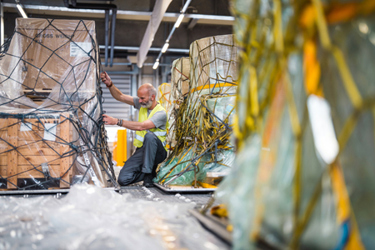
APIs, investigational product, comparators: getting all of it across borders in a year when the legal basis for US tariffs changed three times.
2026 has been a rough year to be the person in charge of clinical supply sourcing. The Supreme Court threw out an entire category of tariffs in February. A replacement regime took effect and then expired by July. A pharmaceutical-specific tariff proclamation landed somewhere in between. Through all of it, trial teams still had drug substance to move, comparators to line up, and IND-enabling shipments that needed to clear customs on schedule. Knowing what actually touches clinical trial materials, as opposed to ordinary commercial pharma trade, isn't optional anymore for anyone running sourcing.
How We Got Here
Start with the Supreme Court. On February 20, 2026, the Court ruled 6–3 in Learning Resources, Inc. v. Trump that the International Emergency Economic Powers Act doesn't actually give the president authority to impose tariffs. That knocked out the broad "reciprocal" tariffs applied to most trading partners, along with the separate tariffs tied to fentanyl trafficking concerns. It left Section 232 national security tariffs and Section 301 unfair-trade tariffs alone, since those rest on different legal footing.
Within hours, the administration reached for Section 122 of the Trade Act of 1974, which permits a temporary global surcharge of up to 15% for up to 150 days to address balance-of-payments concerns. That surcharge started at 10% on February 24, went up to 15% not long after, and expired on schedule on July 24. Section 301 tariffs of 10–12.5% took its place almost immediately, covering roughly 60 economies and tied to forced-labor findings, with some product-specific exemptions built in.
Running the whole time alongside this, untouched by the Supreme Court ruling, was the pharmaceutical track. Commerce opened a Section 232 investigation into pharmaceutical imports back in April 2025, and on April 2, 2026, the White House followed through with a proclamation imposing tariffs of up to 100% on patented pharmaceutical products and their active ingredients. The structure is tiered: 100% by default, 20% if a company has an approved US onshoring plan, around 15% for products coming from the EU, Japan, South Korea, or Switzerland, and 0% for companies that had already signed a Most-Favored-Nation (MFN) pricing deal with the administration before the proclamation came out. The new duties start July 31, 2026 for a named list of large companies, and September 29 for everyone else. Generics and biosimilars, and the ingredients that go into them, are excluded for now, though the proclamation calls for a one-year review of whether that should stay true.
Where Clinical Trial Sourcing Actually Lands
The pharmaceutical track is where this matters most directly for clinical supply, and the news is better than the 100% headline number makes it sound. The tariff targets "patented pharmaceutical articles" specifically: products with a valid US patent that also show up in FDA's Orange Book or Purple Book of approved products. Investigational products that are not FDA-approved may fall outside the scope of pharmaceutical tariffs, but importers should verify eligibility under the applicable tariff provisions, including any specific exemptions for qualifying clinical trial materials. Marken, which handles a lot of clinical trial logistics, has said plainly that importers of investigational products used in clinical research are unlikely to get caught by the new duties, and that generics are excluded outright on top of that.
That doesn't mean clinical sourcing is entirely off the hook. Comparator products bought commercially for a blinded trial arm can themselves be patented, approved, and squarely inside the tariff's scope. API sourced from an overseas supplier for an investigational product could also get swept in if that supplier or country ends up covered under a future expansion of the pharma tariffs, or under an unrelated Section 301 action. Tracing country of origin all the way down to where the API itself was made, not just where the finished dose was packaged, has become its own documentation requirement. US-origin API that gets packaged abroad can still qualify for duty-free treatment, but only if the chain of custody actually holds up on paper.

Tools That Already Exist For This
Clinical supply teams have had the right tools sitting around for a while now, they just haven't needed to use them this much. Chapter 98 of the Harmonized Tariff Schedule includes a Temporary Importation Under Bond provision, subheading 9813.00.05, that lets goods enter the US duty-free against a bond as long as they're not being sold and get re-exported or destroyed within three years. That fits comparator drugs, ancillary equipment, and investigational materials moving across borders for trial purposes rather than commercial sale about as well as anything could. A second provision, 9811.00.60, covers certain samples used soley to solicit orders for products of foreign countries.. Neither one is new, but both are worth checking again against this year's tariff stack, since goods that qualify for Chapter 98 duty-free treatment stay eligible even where Section 232 pharma duties would otherwise apply.
The Bigger Picture
Even where clinical materials are exempt right now, the wider tariff environment still shapes sourcing economics. The Penn Wharton Budget Model has been tracking how far the US effective tariff rate has moved from its historical baseline over 2026, first through the International Emergency Economic Powers Act (IEEPA) tariffs, then the Section 122 surcharge, and now the Section 301 forced-labor tariffs that replaced it. That's three different legal authorities in under a year. The administration has also tied the pharma tariff program to onshoring directly: companies committing to domestic manufacturing investment can get down to the 20% rate, and coverage of the announcement has pointed to hundreds of billions of dollars in pledged US manufacturing investment tied to these negotiations. Add it up: a narrow scope for trial materials today, a policy environment still being litigated and renegotiated, and a one-year clock on the generics exclusion. The sensible move is building sourcing plans that can flex rather than betting that today's exemptions hold.
In my opinion, the biggest risk for clinical supply teams is not necessarily the tariffs in effect today, but the possibility that changing trade policies could disrupt sourcing assumptions, supplier agreements and shipment plans before teams have time to adjust.
What To Actually Do About It
A handful of things are worth doing now rather than waiting for the next proclamation. Classify every SKU by regulatory status, not just HTS code. Confirm whether each comparator, API, and investigational product is patented and Orange or Purple Book listed, generic, or still pre-approval, because that status matters more right now for Section 232 pharma exposure than where the shipment originates.
Document country of origin down to the API itself. Build supplier attestations that trace the finished product back to where the active ingredient was actually manufactured, not just where it was packaged, so a US-origin exemption claim has something to stand on if you need one later.
Use Chapter 98 on purpose instead of by accident. When comparator drugs or equipment are only in the country temporarily for trial use and will be re-exported or destroyed afterward, it's worth running the numbers on Temporary Importation Under Bond (9813.00.05) or the sample provision (9811.00.60) instead of just paying duty by default.
Keep track of the Annex lists and the review clock. Know which finished-product manufacturers sit in Annex II, which carries the MFN exemption, versus Annex III, which carries the earlier effective date, and put the one-year Commerce review of the generics and biosimilars exclusion on the calendar. Nothing in the proclamation guarantees that exclusion stays put.
And build some give into supplier contracts now. The legal basis for US tariffs has already changed three times this year (IEEPA, then Section 122, then Section 301), so supply agreements and dual-sourcing arrangements that can absorb another shift without triggering a full re-tender are worth more than they used to be.
None of this makes the uncertainty go away. The White House has separate Section 232 investigations open on personal protective equipment, medical consumables, and medical devices and robotics, and any of those could eventually touch ancillary clinical trial supplies. For now, investigational products and generic comparators sit mostly outside the highest-profile pharma tariffs. The mistake worth avoiding is treating that as a settled fact instead of a current snapshot, because the next proclamation is probably already being drafted.
About The Author:
 Eric Pittman is a Vice President of Quality and Regulatory Affairs at Project Farma and a former US Food and Drug Administration (FDA) leader who spent more than 20 years with the agency in field and headquarters roles. With more than 27 years of experience spanning federal regulation and industry, Eric brings a unique perspective on regulatory compliance, inspection readiness, quality systems, and the evolving expectations of health authorities.
During his FDA tenure, Eric held leadership roles overseeing inspections, investigations, and compliance programs across clinical, nonclinical, and pharmacovigilance activities. His work also included regulatory policy development, international collaboration, and industry training. He served as a US delegate to the OECD Working Party on Good Laboratory Practice.
Today, Eric advises pharmaceutical, biotechnology, and medical device organizations on regulatory strategy, inspection readiness, and quality and compliance programs. He has led global inspection readiness efforts across more than 25 sites and helps organizations translate regulatory expectations into practical, scalable quality strategies.
Eric holds a Bachelor of Science from Purdue University and a Master of Business Administration from Youngstown State University.