
South Africa In Clinical Trial Supply: An Underrecognized Capability
A conversation between Wilhelm van Zyl, Founder, Veltrion Laboratories, and Elizabeth Urbanek, Executive Editor, Clinical Supply Leader
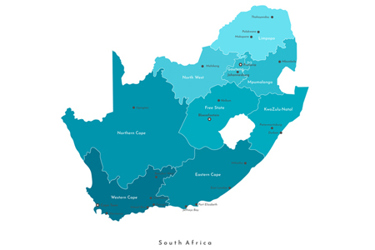
South Africa is rarely at the center of conversations about global clinical trial supply strategy. Instead, it is often grouped into broad "Africa" risk models that fail to distinguish its regulatory maturity, logistics infrastructure, and operational capabilities from those of other markets across the continent.
Those assumptions can influence everything from country selection and import planning to lead times, buffer stock, and regional distribution strategies. Yet many of the risks sponsors plan around are based on outdated perceptions rather than current operational realities.
In this Q&A, Elizabeth Urbanek, executive editor of Clinical Supply Leader, speaks with Wilhelm van Zyl, founder of Veltrion Laboratories, about why South Africa remains underrecognized in clinical trial supply planning, where the biggest perception gaps exist, and how sponsors can better incorporate the country's capabilities into global supply network design.
1. What factors contribute to South Africa being underrecognized in clinical trial supply planning and execution?
South Africa remains underrecognized for reasons that are as much historical as operational. Structural assumptions, outdated information, and limited performance data continue to reinforce one another.
Global clinical supply planning frameworks and risk assessment tools were largely built around North America, Western Europe, and East Asia. Africa has long been treated as a residual emerging markets category, often with uniform high-risk assumptions applied across the continent. This flattens the real differences between South Africa and other African markets.
Much of the publicly available literature still recycles older narratives of regulatory backlog, infrastructure gaps, and political risk. While these issues have existed at various points, the sustained operational performance of experienced South African sites, depots, and logistics partners has not been systematically captured and shared. Supply leaders therefore lack the data they need to recalibrate their assumptions.
The operational metrics that determine supply performance, including on time in full (OTIF) delivery, temperature excursion frequency, inventory accuracy, stockout prevention, forecast reliability, and lead time variability, are rarely published for African programs. Without that evidence, South Africa’s sophisticated private-sector logistics base, experienced investigator networks, English-language environment, mature cold chain capability, and role as a practical regional logistics platform remain undervalued despite a strong operational track record.
2. How does the practical reality of SAHPRA, importation, and in-country execution differ from common external perceptions?
The dominant external perception is still that SAHPRA is slow, opaque, and a source of unpredictable delay, and that importation into South Africa is fraught with bureaucratic friction. The reality is considerably more nuanced.
SAHPRA has made measurable progress through structured review processes, increased digitalization, improved submission guidance, and sustained backlog reduction. While review timelines continue to evolve, the overall regulatory environment has become significantly more predictable than many international sponsors assume. Unfamiliar molecules, complex biologics, or first-in-Africa programs can still attract additional scrutiny, which is appropriate, but for standard programs the process is far more disciplined than the legacy narrative suggests.
On importation, the real friction points are rarely the formal SAHPRA Section 21 authorization itself. More often they sit at the interface of documentation quality, customs classification, temperature-controlled last mile handovers, and coordination between the global supply team, the local depot, and the freight forwarder. When those parties have worked together before and understand South African requirements, experienced teams frequently achieve predictable OTIF performance and low temperature excursion rates. When they have not, small errors compound into multi-week delays and increased drug wastage.
Importantly, operational efficiency must never come at the expense of GxP principles, particularly good distribution practice (GDP). South Africa’s established quality systems and regulatory oversight provide a framework that supports both objectives.
The perception gap is largest when sponsors treat Africa as a single risk bucket and apply outdated cycle time assumptions. The reality is a mature, if still demanding, regulated environment that rewards early local expertise and disciplined execution.
South Africa has another strategic advantage. It serves as a regional logistics platform for sub-Saharan Africa, supported by experienced GDP-compliant depot personnel, responsible pharmacists, clinical logistics specialists, regional import expertise, and established routing into neighboring markets. Yet this capability remains largely invisible in many global supply models.
3. At what point in clinical trial planning do sponsors tend to underestimate South Africa’s operational readiness or overestimate its complexity?
The disconnect usually appears in two places.
Underestimation of readiness tends to occur early, at the country feasibility and site selection stage. Sponsors or CROs relying on global databases or high-level risk scores often flag South Africa as “complex” or “slow” and deprioritize it, even when the protocol would benefit from the country’s patient population, investigator experience, and competitive enrollment potential. A well-chosen network of experienced South African sites, supported by a capable local depot and regulatory partner, can deliver start-up and supply performance comparable with many mid-tier European or Latin American markets, based on objective supply chain performance metrics.
Overestimation of complexity usually surfaces later, during detailed supply chain design and import planning. Global teams apply worst-case lead times and buffer assumptions drawn from less mature African markets or invent multi-hop routing strategies that add cost, temperature risk, and inventory carrying cost without necessity. In reality, Johannesburg functions as one of the principal clinical logistics hubs serving Southern Africa, with direct long-haul capacity, established cold chain infrastructure, and experienced clinical logistics providers. The complexity is real, but it is knowable and manageable when the right local intelligence is injected early.
The most effective approach is to treat South Africa as a high-capability, high-specificity market, not a default inclusion but also not an automatic high-risk exclusion.

4. How should clinical supply chain design (import strategy, depot planning, lead times, buffer stock) evolve to better reflect the operational environment in South Africa?
Four practical changes would substantially improve current planning approaches and better leverage South Africa’s dual role as both a high-performing domestic market and a regional logistics platform.
1. Earlier local input. Bring South African regulatory and logistics expertise into the supply strategy workshop at the same time as European or U.S. depot decisions, not after the global design is already locked. Import permit strategy, labeling language, temperature monitoring requirements, and regional routing options should be designed in, not bolted on.
2. Realistic lead times and continuous forecasting. Replace generic “Africa + X weeks” assumptions with measured lead time distributions for the relevant product class. Forecasts should evolve continuously using RTSM/IRT data as enrollment matures, rather than remaining anchored to pre-study assumptions. Increasing use of digital shipment visibility, real-time temperature monitoring, and predictive inventory analytics further reduces uncertainty and supports more responsive resupply decisions. Experienced teams can usually work to tighter windows and lower buffer stock once the first import has been executed cleanly and the actual variability is known.
3. Depot and distribution architecture that recognizes the regional platform. Johannesburg (and to a lesser extent Cape Town) can serve as one of the principal clinical logistics hubs serving southern Africa. Design should consider whether a single primary depot with well-managed secondary distribution, or a dual-depot model, best fits the protocol’s site footprint. Critically, the same infrastructure (experienced GDP-compliant depot personnel, responsible pharmacists, clinical logistics specialists, temperature-controlled capacity, and regional import expertise) can also support controlled distribution into neighboring markets under centralized oversight. This regional capability is one of South Africa’s most underutilized strategic assets in global supply network design.
4. Intelligent buffer stock calibrated to controllable variables. Buffer should be set against the actual drivers of lead time variability and stockout risk (documentation quality, permit reissues, last mile temperature control, forecast accuracy) rather than a blanket continental risk factor. In many cases a modestly higher initial buffer that is then optimized after the first two shipments, monitored through ongoing supply performance metrics, outperforms a chronically oversized global buffer that increases drug wastage and carrying cost.
5. From a systems perspective, where is the biggest mismatch between perception of risk and real-world operational performance in South Africa?
The largest mismatch sits between the political and macroeconomic risk narrative and the day-to-day clinical supply KPIs that actually determine trial success.
Sponsors frequently overweight headlines around currency volatility, electricity supply challenges, or broader continental risk, while underweighting the hard operational metrics that matter: OTIF delivery, temperature excursion frequency, inventory accuracy, stockout prevention, forecast reliability, and lead time variability. At well-managed programs, these KPIs are competitive with many established markets.
Mature supply chains are designed around controllable process risk rather than perceived country risk. Documentation quality, release planning, forecasting accuracy, and communication between sponsor, depot, and freight partners are variables that can be engineered. Country risk becomes far less significant once those operational disciplines are embedded.
South Africa’s clinical trial infrastructure has developed private sector workarounds and resilience mechanisms (dual-power cold chain solutions, sophisticated freight forwarder expertise, and deep experience with multi-province last mile distribution) that many risk models still fail to capture. Experience from well-managed programs suggests that actual operational performance frequently exceeds what conventional country risk models would predict.
Conversely, the risks that do materialize are frequently self-inflicted: incomplete documentation packages, last-minute labeling changes, weak forecast discipline, or failure to engage the local depot and regulatory partner early enough. Those are controllable process risks, not inherent country risks.
6. What changes in global clinical trial supply planning would be required to make South Africa a standard consideration in supply network design decisions?
Three structural changes would move the needle decisively.
1. Update the playbooks and risk models. Global clinical supply playbooks and automated risk-scoring tools need Africa-specific modules that distinguish South Africa (and a small number of other higher-capability markets) from the broader continent and that explicitly recognize its dual role as both a high-performing domestic market and a regional logistics platform. Uniform Africa risk factors are no longer fit for purpose.
2. Institutionalize early local expertise. Require a short local regulatory and logistics reality check as a standard gate in country selection and supply strategy, equivalent to the early commercial or manufacturing input that many organizations already mandate. This need not be expensive; it simply needs to happen before assumptions harden and before regional options are inadvertently designed out.
3. Create and share performance transparency. Sponsors, CROs, and logistics providers that have run successful South African programs should be encouraged (or contractually incentivized) to contribute anonymized KPI data into industry forums. Better data is the fastest way to correct outdated perceptions.
South Africa should no longer be viewed as an emerging market exception requiring additional justification. It should be evaluated using the same evidence-based operational criteria applied to any other mature clinical trial market.
About The Contributor:
 Wilhelm van Zyl is the founder of Veltrion Laboratories, a regulatory affairs and clinical trial infrastructure consultancy focused on African and Middle Eastern markets. An admitted attorney of the High Court of South Africa with prior senior roles in global clinical operations at IQVIA and ICON, he has advised on the legal, regulatory, and operational frameworks supporting multinational clinical trial programs spanning numerous jurisdictions worldwide. His current work centers on de-risking SAHPRA pathways, import/export execution, and building practical compliance systems that allow global sponsors and CROs to treat South Africa as a reliable, high-value component of their clinical supply networks and as a practical regional logistics platform, rather than an afterthought. Through Veltrion he advises on regulatory strategy, site and depot readiness, and the operational realities that separate successful African programs from those that stall.
Contact: wilhelm@veltrionlaboratories.com · +27 60 6000 274 · veltrionlaboratories.com