
The Future Of Clinical Supply Operations: Automation Without Losing Human Expertise
By Laura Hay, senior director of global program management, Trax Group | 2025 Winner, everywoman Customer/Passenger (Leader) Award
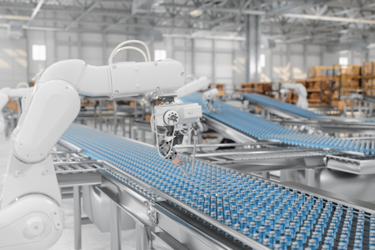
Automation is becoming an increasingly important part of supply chain operations, and in my view, that's a positive development.
As supply chains become more complex and data volumes continue to grow, organizations need better ways to manage routine activities efficiently. Tasks such as transaction processing, reporting, data reconciliation, and routine monitoring are all strong candidates for automation because they consume significant time while often requiring limited human intervention. When implemented effectively, automation allows teams to spend less time managing repetitive processes and more time focusing on work that creates greater value for the business.
Why Automation Is Gaining Momentum In Supply Chain Operations
But while automation will continue to transform clinical supply operations, I don't believe it replaces human expertise. In fact, I would argue that the more sophisticated our technology becomes, the more important human judgment becomes alongside it.
Clinical supply chains operate in highly regulated, highly variable environments. Every clinical trial is different. Patient enrollment rates can change unexpectedly. Regulatory requirements vary across countries. Manufacturing timelines shift. Logistics disruptions occur. Stakeholder priorities evolve. These aren't simply operational challenges that can be solved through automation alone. They require experience, critical thinking, collaboration, and decision-making.
Technology is exceptionally good at processing information, identifying patterns, monitoring performance, and highlighting exceptions. It can analyze data far faster than any individual and provide visibility that would be difficult to achieve manually. What technology cannot do is fully understand the context surrounding a decision. It cannot replace the conversations required to align stakeholders with competing priorities. It cannot navigate the nuances of a regulatory concern. It cannot build trust with customers, partners, or internal teams. And it cannot apply the judgment that comes from years of experience managing complex situations.
Where Technology Reaches Its Limits
That's why I believe the future of clinical supply operations isn't humans versus technology. It's humans supported by technology.
The organizations that achieve the greatest success won't be the ones that automate everything. They'll be the ones that automate the right things. Routine work should be automated wherever possible. If technology can process transactions more accurately, reconcile data more efficiently, or generate reports more quickly, organizations should embrace those capabilities. Not because they're reducing the importance of people, but because they're allowing people to focus on work that technology cannot do.

Automating The Right Work, Not All Work
I've always believed that talented professionals create the most value when they're solving problems, managing risk, making decisions, and building relationships — not spending hours manually updating spreadsheets or reconciling data across systems. Automation creates the opportunity to shift time and attention toward those higher-value activities.
It also helps organizations become more proactive. Rather than spending significant resources gathering information, teams can focus on interpreting information. Rather than reacting to issues after they occur, they can identify trends earlier and take action before risks become larger problems. That shift has the potential to improve both efficiency and decision-making.
At the same time, organizations should be careful not to view automation as a substitute for expertise. Technology can support decisions, but it shouldn't replace accountability for those decisions. Human oversight remains essential, particularly in environments where patient outcomes, regulatory compliance, and operational risk are involved.
The most successful organizations will continue to invest in both technology and people. They'll build systems that provide better visibility, automate routine activities, and streamline workflows while also developing leaders who can navigate complexity, manage uncertainty, and make sound decisions when circumstances change.
Regardless of how advanced technology becomes, there will always be situations where experience matters. There will always be moments when judgment matters. And there will always be a need for people who can bring stakeholders together, evaluate competing priorities, and make decisions that balance operational, regulatory, and business considerations.
The future of clinical supply operations is not about choosing between human expertise and automation. It's about combining the strengths of both. Automation can help organizations move faster, improve accuracy, and increase efficiency. Human expertise provides the context, judgment, and leadership needed to turn information into action. When those capabilities work together, organizations create more resilient operations, stronger decision-making, and better outcomes for everyone involved.
About The Author:
 Laura Hay is a global supply chain leader specializing in program management, customer success, and account strategy. She has a proven track record of leading cross-functional teams to deliver complex, high-impact initiatives on time and within budget. Laura is known for building strong stakeholder relationships, driving operational excellence, and managing multimillion-dollar programs. She is passionate about connecting people, processes, and technology to build scalable, resilient supply chain solutions that deliver measurable business impact.