
Why Shelf Life Should Shape Global Country Activation
By Joseph G. Oberlander, Ph.D., PMP, pharmaceutical development consultant and program manager
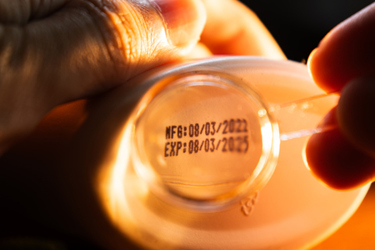
Traditionally, country selection has focused on regulatory timelines, investigator enthusiasm, patient availability, and start-up costs. These remain important considerations. However, sponsors increasingly need to add product maturity to the equation. A country may appear attractive because of rapid regulatory review timelines, but if importation, distribution, and patient treatment will consume most of the currently approved shelf life, the practical value of that activation becomes questionable.
One of the most common misconceptions is that activating countries as quickly as possible is always the correct strategy. This belief is understandable. Clinical programs face constant pressure to recruit patients, generate data, and meet investor expectations. Every month of delay appears costly. Yet speed alone does not guarantee success. In many cases, activating a country before a shelf life extension strategy has matured can actually create more risk than waiting for additional stability data.
Imagine a sponsor initiating a Phase 2 global study using product with a relatively short approved shelf life. Several countries are activated immediately based on initial regulatory approvals. Six months later, new stability data become available supporting a significant extension. While this appears beneficial, the sponsor may now face multiple rounds of regulatory submissions, country-specific approvals, relabeling activities, qualified person assessments, depot updates, and communication with sites already preparing to dose patients. The organization is effectively trying to repair the aircraft while it is already in flight.
In contrast, a more strategic activation approach recognizes that not all countries need to be initiated simultaneously. Countries should be activated when both the market and the product are ready. This distinction is critical.
The most successful global studies increasingly utilize phased activation strategies. Rather than viewing country activation as a single global event, they view it as a sequence of deliberate waves. Early-activation countries are selected because they can be reliably supplied using the currently approved shelf life. Additional countries are activated later as stability data mature and regulatory flexibility increases.
Country Activation Is Also A Supply Decision
This approach frequently appears slower on paper. In practice, it often produces a more stable and predictable enrollment trajectory because sponsors spend less time managing amendments, relabeling campaigns, and performing emergency supply interventions.
Organizations that understand this concept tend to make more effective activation decisions. Instead of focusing exclusively on which countries can be approved first, they focus on which countries can be supplied most reliably throughout the anticipated enrollment period.

Regulatory Shelf Life Isn’t Operational Shelf Life
Clinical supply leaders therefore need to think beyond regulatory shelf life and focus instead on what might be called operational shelf life. Operational shelf life represents the actual period available for patient treatment after accounting for release testing, importation, customs clearance, depot handling, site distribution, and patient use. It is the shelf life that truly matters.
A product may have 12 months remaining before expiry, but if four months are required for importation and distribution and another four months are needed to complete treatment, the inventory may already be of limited practical value in certain markets. This distinction becomes particularly important during country activation planning. The question is not whether inventory remains technically usable. The question is whether enough usable time remains to support enrollment, treatment, monitoring, and resupply activities without introducing unnecessary operational risk.
A particularly important consideration for small biopharma companies is the quality of the initial regulatory filing. Most discussions around shelf life extensions focus on what happens after new stability data become available. Far less attention is given to the role of the original submission. In reality, the initial Investigational Medicinal Product Dossier can significantly influence future flexibility.
If the filing includes a well-designed ongoing stability strategy and clearly describes how future shelf life evaluations will be performed, subsequent extensions may be easier to implement. Some health authorities have acknowledged that where predefined stability protocols and extension methodologies have already been reviewed, certain shelf life updates may not require the same degree of regulatory reassessment as entirely new proposals.
From a supply chain perspective, this represents a remarkably important opportunity. A modest investment in the quality of the initial filing can generate years of operational flexibility. Conversely, a narrowly constructed stability strategy may force the organization into repetitive regulatory submissions every time additional data become available.
About The Author:
 Joseph G. Oberlander, Ph.D., PMP, is an experienced pharmaceutical development consultant and program manager. His consulting experience ranges from preclinical to Phase 3 programs, across multiple therapeutic areas (oncologic, metabolic, CNS) and drug modalities (NCE, biologics, biosimilars, generics, CGT), at clients ranging from virtual startups to large biopharma, and throughout the drug life cycle (from raw materials sourcing to finished goods use) for drug programs with global operations. His consulting focus includes deep expertise in clinical supply chain strategy and distribution logistics and in analytical and stability program management. In addition, he has significant research experience in neurobiology and is a published author contributing to the understanding of inherent biological sex differences in synaptic physiology and how these differences impact drug effects and deepen our understanding of preclinical disease models.