
The cGMP Reality Of Clinical Supply For Advanced Therapies

By Rachel Grabenhofer, Chief Editor, Clinical Supply Leader
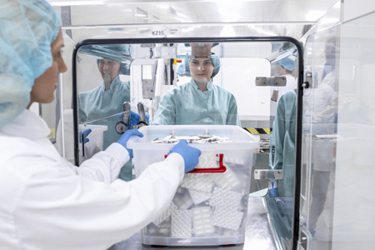
Without a doubt, breakthroughs in cell and regenerative therapies have transformed health care, unlocking unprecedented treatment possibilities. What’s more, the frequency of their discoveries is multiplying – as reflected in headlines across major news outlets.
For starters, axicabtagene ciloleucel (Yescarta, Gilead Sciences), was one of the first CAR‑T therapies, approved in 2017 by the U.S. Food and Drug Administration (FDA). Exagamglogene autotemcel, or Casgevy (Vertex Pharmaceuticals Inc./CRISPR Therapeutics) – an autologous gene‑edited stem cell therapy designed to reduce severe pain in sickle cell disease – was approved by the FDA in 2023.
Lifileucel (Amtagvi, Iovance Bioterhapeutics), an autologous tumor‑infiltrating lymphocyte therapy, was approved by the FDA in 2024 for solid tumors in adults with unresectable or metastatic melanoma. Looking globally, on May 3, 2026, China’s State Drug Administration authorized the initiation of clinical trials for ALF201 — an allogeneic endothelial progenitor cell injection derived from induced pluripotent stem cells (iPSCs).
But whether advanced therapies ever reach patients depends on something far less conspicuous than what you read about in headlines: how well clinical supply chains are designed to handle the realities of these high-maintenance medicines.
In early‑phase autologous trials especially, there’s no room for error. Each treatment manufactured is patient specific. Timelines are tight. Patients, materials, documentation, the environment, and other factors must align precisely — or sadly, the promise of the therapy stalls before it ever reaches the clinic.
Tatyana Matveeva, Ph.D.’s, work is focused where these factors intersect. A neuroscientist by training, she has a background in systems and molecular neuroscience – but her desire to directly impact patients drove her from academic research into translational work.
She is now director of cGMP operations for cell therapy and regenerative medicine at Harvard Medical School and Massachusetts General Hospital, where she helped build a GMP cell therapy facility from the ground up — starting with an empty space and creating the full GMP infrastructure, programs, documentation, and training required to support early‑phase clinical trials.
Her path has shaped how she views clinical supply: not as a downstream function, but as a determinant of treatment timing, access, and execution. My recent discussion with her illustrates such.
Patient Timing: Driving Every Supply Decision
In autologous cell therapy, supply planning begins well before anything resembling distribution does. Once patients are enrolled and cleared, the clock is already ticking.
“Patient timing and scheduling matter,” Matveeva says. “Patients are enrolled and cleared, and there isn’t much time between getting an initial sample, confirming eligibility, and moving toward transplant. You don’t want months or even years to pass before cells are delivered, because delays impact the patient.”
She continues: “An illness can progress over time; resources can be depleted over time; mobility can change over time — all of these factors, individually or together, may drastically alter a patient's (and their family's/caregiver's) ability to receive or respond as hoped to treatments,” Matveeva explains.
As might be expected, the sensitivity of this timing varies with the treatment and indication, among other factors. “Delays also often spell additional expenses, and reducing those is always an objective – yet you also can’t cut corners. The point is the safest, highest‑quality product.”
This tension between urgency and safety rigor defines clinical supply execution in early‑phase trials. Materials planning alone requires a level of precision that’s less like standard inventory management and more like risk coordination.
“You have to plan quantities and procurement around constraints like single‑lot usage and expiration dating, with enough buffer to complete manufacturing,” she explains. “At multiple points you need verification, so you eliminate opportunities for error — mixing materials, mixing lots, or misidentification.”
She adds that forecasting mistakes must be contained quickly before they disrupt the entire system. “If something goes wrong, you have to correct it, so a deviation doesn’t propagate through the process.”
Materials planning also includes front‑end testing to confirm reagents are within specification, along with contingency planning for discontinuations, shipping delays, or abnormal stock solutions — issues that can immediately stall a patient‑specific manufacturing run if not anticipated.
Environmental factors add yet another layer, as cleanrooms don’t operate in isolation from their surroundings. “Seasonality can affect the cleanroom environment,” she explains. “Boston summers are humid, which can increase contamination pressure. So, you plan around environmental monitoring and controls.”
Operationally, this means adjusting monitoring frequency, controls, and staffing to maintain cleanroom performance under changing environmental conditions — decisions that directly affect manufacturing schedules.
By the time a patient‑specific manufacturing cycle begins, improvisation is no longer an option. “Ultimately,” Matveeva says, “for every patient, documents, materials, environment, equipment, and personnel all have to come together.”
Traceability as Supply Infrastructure, Not Convenience
As complexity increases, improper documentation quickly becomes a liability. As such, Matveeva treats traceability as a foundational infrastructure for advanced therapy supply chains.
“Records need to be maintained in a way that’s safe and independent from the people using them — that independence is the point of oversight,” she explains, adding that document control systems with audit trails and version control are not simply regulatory checkboxes; they are how organizations demonstrate control under scrutiny.
“If the FDA audits you, they compare your practices to what your document‑control system shows,” she says. “If there’s a discrepancy, or if you’ve documented something like contamination, they’ll audit your corrective and preventive action records.”
Those records must show resolution, not just acknowledgment. “If you haven’t demonstrated you solved the problem,” she continues, “that’s a big deal — and it’s how you end up with FDA 483 observations.”
Beyond regulatory exposure, traceability helps organizations to prevent the perpetuation of processes with known, realized risks — making it a safety infrastructure for both patients and operations, not simply a documentation exercise.
To advance technical documentation, future solutions including AI have been proposed, but Matveeva is careful to draw boundaries. “It’s not enough to have an AI that ‘maintains quality’ unless a qualified human risk and quality function has vetted it and confirmed it works.”
So, for now, traceability remains a discipline that’s designed, governed, and enforced by humans.
Quality Independence as a Supply‑Chain Safeguard
The pressure to move trials forward is real — particularly in early‑phase programs. But Matveeva is firm that quality independence cannot bend to timelines. “Your quality assurance unit should have independence from the people whose job is to push the trial forward. Otherwise, you create a conflict of interest,” she says.
That independence also needs active reinforcement from leadership. “If quality says ‘do A’ and management prefers ‘B,’ management must not do B — and must not pressure quality to change its position.”
She furthers that in well‑run operations, an independent quality unit is empowered to stop or delay manufacturing when risks are unresolved — often preventing unwanted inspection findings, manufacturing holds, or downstream trial delays.
When Logistics Limit Who Gets Treated
Even the most rigorously controlled manufacturing operation, however, cannot solve one of the biggest challenges facing cell and gene therapies: patient access.
Matveeva gives the example: “Out of every 100 people who are eligible and should receive CAR‑T therapy, about 20 actually get treated,” she explains. “That’s horrendous — only one fifth of those who could benefit.”
Geography plays a decisive role. “As distance increases between a patient and a certified center that can administer therapy – with the right infrastructure and cold storage – the odds of receiving treatment drop sharply.”
For Matveeva, this gap is not rooted in clinical uncertainty. “This is fundamentally a supply chain and infrastructure problem — not just GMP,” she emphasizes.
Cryogenic handling requirements, liquid nitrogen availability, and trained personnel remain concentrated in major academic centers. “Most places outside major medical centers don’t have a reliable liquid nitrogen supply chain,” she notes.
Logistics can also influence treatment decisions, as patients and physicians may default to nearby, more familiar therapies rather than advanced options that require travel, specialized handling, and certified centers.
Expanding access, Matveeva believes, will require rethinking how and where supply infrastructure lives. “We need a distributed hub‑and‑spoke model,” she says. “Manufacture in one place but have intermediate locations for storage and trained staff who can thaw and administer therapy.”
Tech Transfer: Where Supply Chains Quietly Break
Reassessing this distribution model highlights a parallel challenge that’s critical to clinical supply readiness: transferring and translating therapies from research into reliable, GMP‑ready manufacturing processes.
Many cell therapies originate in academic or research environments optimized for discovery rather than clinical execution. “Research labs often do excellent work developing a therapy over many years and reproducing results in the research setting — but that product can’t go into a patient,” explains Matveeva.
“Once you move toward an IND and the FDA allows you to proceed, you can’t manufacture for clinical use in an unclassified research room. You need a GMP facility.”
Transferring a technology from the developer to clinical manufacturing, whether an internal GMP facility or a CRO/CDMO, requires significant translation. It’s also the point at which misalignment most commonly occurs, according to Matveeva – and the challenge is rarely scientific in nature.
Instead, it stems from a disconnect between development teams and the realities of clinical manufacturing and regulatory compliance. “Development teams often don’t speak the language of clinical manufacturing and regulatory compliance,” Matveeva says.
“They may think they have a well‑described process, but GMP requires far more detail and concreteness.” In addition, the regulatory landscape is broad and continually evolving, creating expectations that exceed research norms.
“Clinical manufacturing begins with documentation, training, qualification, validation, and the controlled environment itself,” Matveeva elaborates, highlighting that the FDA expects a level of specificity that research settings simply do not require.
“Vague instructions that may be acceptable in a lab — such as shake gently or set it aside for a few minutes — must be replaced with clearly defined, measurable, and auditable parameters that can withstand regulatory scrutiny.”
Matveeva underscores it is critical to address this gap in tech transfer knowledge early. “If you wait until friction across stakeholders emerges, it becomes expensive and creates discontent.”
She continues: “From the development side, it’s understandable why it can feel confusing or objectionable — it’s very different from getting a research project done.” This is why she emphasizes explaining the why rather than simply calling for compliance.
Collaborating with development teams up front – including exposing them to applicable regulations and FDA expectations – can save months of time. It also supports compliant process validation, improves risk mitigation, and makes alignment across manufacturing, clean operations, and external partners easier.
Central to this effort is what Matveeva describes as a ‘translator’ role — someone with a strong scientific background who also works in regulatory and GMP. This individual understands the underlying science and can meet with the development team to break down the process in a way that aligns with FDA expectations before IND‑enabling work begins.
“It’s reasonable to sit down together and say: ‘Here is the project. Here are the rules that apply. Here’s how they’re structured. And here’s how the FDA expects us to interpret them,’” she continues. “Doing that together preserves the integrity of the development process.”
It also makes the technology transfer process go much more smoothly. “It doesn’t mean you’ll have a perfect process — improvement never ends in GMP — but you can create a realistic list of things that could go wrong, introduce controls, and transfer the technology from the lab to the cleanroom to start process validation in the clinical space, in compliance.”
By translating great science into the FDA’s language early on, teams can preserve relationships, maintain momentum, and ensure a smoother transition from the lab bench to the cleanroom.
Designing for Reality
As cell and gene therapies move beyond early‑phase trials and centralized centers, their success will depend less on innovation alone, and more on whether clinical supply chains are designed for real‑world constraints.
Autologous therapies especially amplify every weakness — forecasting gaps, infrastructure limits, quality shortcuts, and misaligned handoffs. Addressing those issues early, before the first patient is dosed, is no longer optional.
Taken together, as Matveeva explains it, advanced therapies don’t fail because the science isn’t good enough. They fail when the system around them isn’t designed to carry that science all the way to the patient.
 About Tatyana Matveeva, Ph.D.
Dr. Tatyana Matveeva serves as the Director of cGMP Operations at the Regenerative Cell Therapy Laboratory, Dept of Neurosurgery, Mass General Hospital and Harvard Medical School in Boston, MA. She joined MGH in 2023 to establish a cell therapy cGMP program for phase I trials, and her efforts span all operational and compliance aspects of clinical grade cGMP cell production; from personnel development, qualification, and management, to supply chain, quality programs, document development and control, and contract negotiations. The newly developed cGMP facility is now providing a fully operational compliant infrastructure for clinical grade cell manufacturing, with plans for expansion of services and new partnerships underway.