CLINICAL SUPPLY MANUFACTURING ARTICLES
 Warning To U.S.-Based CDMOs: Don't Get Complacent
How could I not ask him for an opinion regarding our vigorously pursued editorials on the WuXi Apptec–BIOSECURE Act. After all, Reza Oliyai has outsourced a myriad of development and manufacturing services to hundreds of CDMOs around the world. He did so at Gilead for decades, and since as the CEO of his eponymous consulting company. His response did not disappoint.



CLINICAL SUPPLY MANUFACTURING VIDEOS

If you are in the process of developing a complex or sensitive injectable drug, learn about containment solutions to mitigate your risks and help you get your drug to the patient faster.

Succeed in combination product development by understanding the risk factors that may arise and implementing mitigation strategies that will streamline the device development process.

Industry experts share insights to help you mitigate supply chain risk and accelerate access to novel cell and gene therapies.

Early planning mitigates risk by avoiding stock outs and study delays, minimizing waste with optimized inventory, and forecasting demand to facilitate robust supply planning.
CLINICAL SUPPLY MANUFACTURING RESOURCES
-

Developing a placebo for an injectable drug requires consideration of the formulation’s impact in trials, chemistry and physical details, ethical concerns, and regulatory compliance.
-

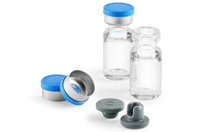
The Daikyo Crystal Zenith nested vials meet the exterior dimensions of the glass standard ISO 8362-1. The vials maintain CCI for up to 6 months and can withstand ultra-cold temperatures and drop conditions.
-

Clinical manufacturing is a specialized form of pharmaceutical manufacturing focused on producing drugs for clinical research. How does it work and how is it different from commercial manufacturing?
-

CZ vial-stopper-seal combinations offer a viable solution for the challenges associated with low-temperature storage of cell therapy drug products.
-

When it comes to transporting highly sensitive and valuable materials, such as cell therapies, learn how teams can ensure that unique storage and distribution requirements are met.
-

Explore the challenges when moving a bioconjugate candidate from early development to clinic, along with integrated solutions for navigating this growing area of the biopharmaceutical industry.
-

Handling controlled substances presents layers of complexity. Partnering with an experienced CDMO is essential for managing scheduled materials during clinical studies.