

Alzheimer’s trials challenge clinical supply teams with volatile enrollment, global distribution, cold chain needs, real-time forecasting and patient-centered planning.


- Is Your Supply Chain Ready For The End Of Class VI?
- Why Shelf Life Should Shape Global Country Activation
- Three Months Too Late: How Late Decisions Create Clinical Supply Challenges
- The Hidden Work Between Protocol And Execution: Translating Requirements Into Supply Strategy
- Clinical Trial Supply In The EU And U.K.: A Regulatory Guide
- Clinical Supply Chains Need To Solve Problems Before They Happen
- How New Models Could Improve Trial Enrollment Forecasts
- Can Site Enrollment Data Improve Clinical Trial Forecasts?
ON-DEMAND WEBINARS
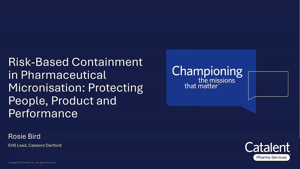
This session presents a risk-based framework for high-potency micronisation, illustrated through a practical case study that spans development to commercial scale.
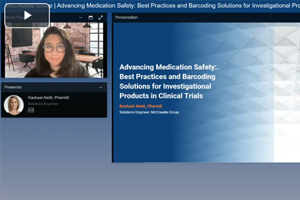
Investigational products present a distinctly high-risk environment for labeling and barcoding. Explore best practices for barcoding solutions that allow for improved medication safety in clinical trials.
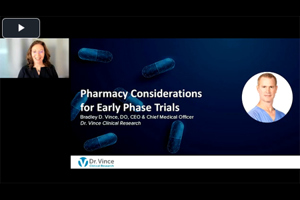
This presentation explores practical pharmacy considerations in early-phase clinical trials, offering real-world insights from experienced clinical research pharmacists.

Discover how to transform logistical challenges into strategic advantages with flexible, forward-looking solutions designed for today’s dynamic clinical development landscape.
ARTICLES, APP NOTES, CASE STUDIES, & WHITE PAPERS
-
 Internal Validation Study: Ultra-Low Temperature Labels
Clinical trial vials held at ultra-low temperatures need labels that stay put. Three label formats, applied under dry ice conditions, were compared for qualification.
-
 QP Certification Of Investigational Medicinal Products In The EU And UK
Personal legal responsibility, post-Brexit certification rules, and a three-part documentation review shape how investigational batches reach patients in the EU and UK, and how sponsors work with their certifying QP.
-
 Accelerating A Complex Global Cardiovascular Outcomes Trial Via Coordinated Execution
Coordinating CRO, clinical supply, and central lab activities from the start shaped how a 1,500-site, 35-country cardiovascular outcomes trial moved ahead of plan on activation and enrollment.
-
 Turning Rapid Study Start-Up Into Enrollment Momentum
A large Phase III ATTR-CM outcomes trial spanning 37 countries reached 50% enrollment eight months early, with monthly accrual rates running 3–5x above plan through coordinated cross-functional execution.
-
 The Phase 2 Manufacturing Wall: The CMC Risk Hiding In Plain Sight
Hidden gaps in process maturity and organizational alignment can derail development. Discover how to identify risks early and improve readiness for key milestones.
-
 Vertex On Building Risk Into Manufacturing Network Strategy
Supply disruptions are becoming harder to predict. Explore practical strategies for continuity planning, supplier risk management, and network design to build lasting resilience.
-
 Clinical Trial Logistics: What Biopharma Needs To Prepare For Next
Fragmented clinical trial logistics are slowing programs and increasing risk. Learn how coordinated planning and digital visibility are becoming competitive advantages in complex, global studies.
-
 Packaging And Labeling Support For A Global Cell Therapy Program
Master complex cell therapy logistics with coordinated depots, purpose-built labeling, and temperature-controlled solutions that protect product integrity.
-
 Improving Clinical Trial Label Translation Through Centralized Reuse And Control
Eliminate workflow inefficiencies and regulatory risk in global trials with a centralized translation framework and validated phrase library for consistent, cost-effective execution.
-
 When Every Hour Counts: Emergency Transfer Protects Critical Biomedical Materials
Rapid deployment of specialized cold chain logistics and cryogenic assets ensures strict temperature compliance, protecting critical research continuity and preventing catastrophic material loss.











BEYOND THE HEADLINES
What happened. What it means for clinical supply.
-

Perspective Therapeutics prepares for a Phase 3 radiopharmaceutical trial as manufacturing capacity expands, raising questions about isotope access and site readiness.
-

Medicine labeled for clinical trials reached children receiving routine SMA treatment in Kerala, raising questions about inventory controls, labeling and supply authorization.
-

Syneos Health and Optum are developing adaptive clinical trial planning capabilities that could help sponsors anticipate protocol changes and supply risks earlier.
-

AstraZeneca and Oracle are exploring AI for clinical trial recruitment, raising questions about how earlier enrollment insights could shape clinical supply forecasting and resupply plans.
-

Filament Health will supply psilocybin for a proposed Belgian compassionate use program, pending regulatory approval and required authorizations for cross-border supply.





CATALENT CORNER

| Insights from Catalent's Clinical Supply Experts |
SPONSORED CONTENT
Impact Of Supplier Choice On APAC Clinical Trial Execution
Learn about strategies Asia-Pacific has become an increasingly complex and congested destination for clinical trials as local and global sponsors alike flock to the region to take advantage of its many benefits, including access to large patient pools. Choosing the right clinical packaging and supply chain partner to support these studies is critical and can vary significantly based upon what countries are involved and the types of services required.


