
Shenzhen APEC Restrictions And Bangkok Cargo Backlog Squeeze Air Freight Lanes Into South China And Thailand
By Elizabeth Urbanek, Executive Editor
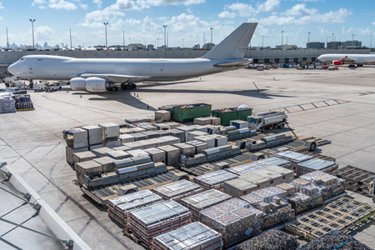
Two separate disruptions are tightening air cargo capacity into southern China and Thailand this month: restrictions around the Asia-Pacific Economic Cooperation (APEC) summit in Shenzhen, and a lingering warehouse backlog at Bangkok's Suvarnabhumi Airport. Both affect lanes that carry temperature-sensitive pharmaceutical shipments.
Freight forwarders and carriers are warning of cargo restrictions at Shenzhen Airport from Nov. 16 to 20, Air Cargo News reported Nov. 11. APEC leaders meet in Shenzhen Nov. 18 and 19. Cargo carrier Teleport said international passenger flights to and from Shenzhen will not be allowed to carry cargo during that period and that domestic capacity will be cut by 80%. ANA cited restrictions on dangerous goods and perishables, along with a 12-hour acceptance cutoff before departure and import collection no sooner than eight hours after arrival.
Sunny Worldwide Logistics said freighter flights from Shenzhen may be suspended or diverted and that Guangzhou may see heavier volumes. It advised trucking urgent cargo to Hong Kong International Airport.
In Bangkok, Thai Airways suspended cargo acceptance at its Suvarnabhumi warehouse from Sept. 30 to Oct. 6 after flooding cut staffing. The backlog has persisted because the warehouse system is not recording where shipments are stored, according to The Nation. The Loadstar reported Nov. 9 that Thai Airways had asked airlines to reduce Bangkok-bound volumes and restricted additional charters. Pharmaceuticals were among the affected shipments, and some cargo that normally clears within 24 hours has taken days or weeks. Thai Airways has added staff, forklifts, and a cargo location tracking application.
None of the reports say whether temperature-controlled pharmaceuticals count as perishables under the Shenzhen restrictions, whether medical shipments are exempt, or when the Bangkok backlog is expected to clear.
What This Means For Clinical Supply
Air freight carries much of the temperature-controlled investigational medicinal product (IMP) and comparator supply moving to Asia-Pacific trial sites. A capacity cut at one airport, even for a week, can reach site inventory quickly.
The Shenzhen restrictions raise a classification question first. Dry ice is regulated as a dangerous good in air transport, so a carrier's dangerous goods restriction could affect frozen shipments packed with it. Whether 2°C to 8°C pharmaceuticals fall under a perishables restriction depends on how each carrier applies it. Teams would need to confirm both points with their forwarders before Nov. 16.
Rerouting comes with its own costs. Trucking to Hong Kong adds a border crossing and may involve a different importer of record and customs process for mainland sites. Diverting through Guangzhou may run into the extra volume forwarders expect there. Holding shipments instead moves site inventory closer to resupply triggers.
In Bangkok, the risk is dwell time. A shipment that cannot be located in a warehouse cannot be re-iced, moved into cold storage, or released. Passive shippers qualified for a set duration may run out of protection during a multiday hold, leading to temperature excursions, quarantined stock, and replacement shipments.
The coordination spans forwarders, carriers, ground handlers, local depots, and the interactive response technology (IRT) system that triggers resupply. Options teams could evaluate include pulling resupply forward for sites in southern China, extending shipper duration or switching to active containers on Bangkok lanes, routing through other handlers at Suvarnabhumi, and temporarily raising IRT resupply triggers. Each adds cost, and early shipments may strain sites with limited storage.
The reports do not establish that any clinical trial shipments have been delayed, and the Shenzhen measures are temporary.
For sponsors with sites in southern China or Thailand, the operational question is whether the next two weeks of resupply can move early enough, and with enough temperature margin, to ride out restrictions they do not control.
The Supply Question
Should clinical supply teams pull resupply forward ahead of short air cargo restrictions, or hold standard rules and manage excursions?
Related Clinical Supply Leader Editorials:
- The Handoff Problem: Where Clinical Supply Execution Actually Breaks
- Clinical Trial Supply Chains Need To Prepare For A Less Predictable World
- Los Angeles And Long Beach Port Strike Deadline Moves To Nov. 20, Keeping Ocean Freight Risk In Play
About The Editor:
 Elizabeth Urbanek is the Executive Editor for Clinical Supply Leader, where she works with clinical trial supply and logistics professionals across pharma and biotech to bring real-world perspectives, operational challenges, trends, scientific insights and regulatory strategy to the field.
Before joining life sciences media, Elizabeth spent more than 15 years in broadcast, digital and live-event storytelling, helping highly technical teams communicate complex ideas with clarity and impact. She brings that same approach to clinical supply, creating editorial space for experts to share what is happening across clinical trial operations.
Elizabeth is passionate about connecting people and ideas, identifying emerging themes and showcasing work that can move the clinical supply field forward.